Roy Keane: Age, Career, Family, Manchester United and More
From Cork football pitches to captaining Manchester United, Roy Keane built his name through demanding standards, big performances, trophies and a career that still keeps him at the centre of football debate.

Introduction
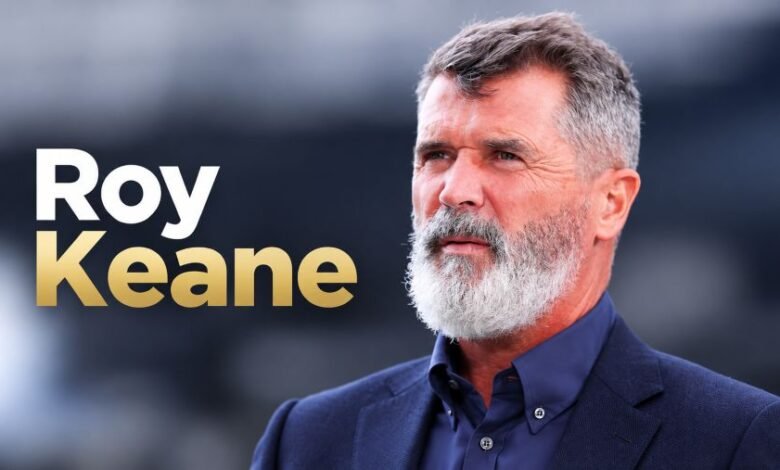
Roy Keane is one of Ireland’s best-known former footballers. For Manchester United fans, he is closely tied to one of the club’s most successful periods.
He played hard. Very hard.
But reducing him to tough tackles misses plenty. Keane could pass, press, read games, carry the ball and set the pace from midfield. He later became a manager, coach and football pundit.
As of September 2026, he remains active in football media, including work with Sky Sports and ITV.
Quick Facts About Roy Keane
| Fact | Details |
|---|---|
| Full Name | Roy Maurice Keane |
| Date of Birth | 10 August 1971 |
| Age | 55 years old |
| Birthplace | Cork, Ireland |
| Nationality | Irish |
| Height | 180 cm |
| Position | Midfielder |
| Youth Club | Rockmount |
| Senior Clubs | Cobh Ramblers, Nottingham Forest, Manchester United, Celtic |
| Manchester United Years | 1993–2005 |
| Manchester United Captain | From 1997 |
| Republic of Ireland Caps | 67 |
| Ireland Goals | 8 according to UEFA |
| Wife | Theresa Keane |
| Children | Five |
| Former Manager Of | Sunderland, Ipswich Town |
| Current Work | Football pundit |
| Premier League Hall of Fame | 2021 |
The Premier League records Keane as an Irish midfielder born on 10 August 1971 and lists his height as 180 cm.
Who Is Roy Keane?
Roy Keane is a former Irish professional footballer, manager and coach who is now widely seen on television as a football analyst.
Most people connect him with Manchester United.
That makes sense.
He joined United in 1993 and later became captain. During his Premier League career, he made 366 appearances, scored 39 goals and supplied 33 assists. He won seven Premier League titles.
His leadership became a major part of his public image.
So did his temper.
Yet the football came first.
Roy Keane’s Early Life in Cork
Keane grew up in Mayfield on the north side of Cork.
His parents were Maurice “Mossie” Keane and Marie Keane. The family had five children: Denis, Johnson, Hilary, Roy and Pat.
They lived in a working-class area, and football was part of Keane’s life from a young age. The Irish Times has documented the family’s long connection with Mayfield and Cork.
His first major football base was Rockmount.
That period mattered.
Keane spent years there before getting his chance with Cobh Ramblers. Early scouts did not immediately treat him as a future star, but he kept playing and pushing for a professional opportunity.
Starting With Cobh Ramblers
Cobh Ramblers gave Keane a route into senior football.
He was still a teenager.
His performances eventually caught the attention of Nottingham Forest, where Brian Clough was manager.
Clough took the chance.
Keane moved to England and began the part of his career that changed everything.
The Premier League credits Clough with bringing Keane from Cobh Ramblers to Nottingham Forest, and Keane later described Clough as his biggest influence in football.
Nottingham Forest Career
Keane quickly became a regular at Nottingham Forest.
He was energetic. Sharp too.
His game was based on constant movement, ball-winning and getting involved at both ends of the pitch.
Forest struggled badly during the first Premier League season in 1992/93, finishing bottom of the table.
Keane still stood out.
He was selected in the PFA Team of the Year. According to the Premier League, he remains the only player to make that team while representing the club that finished last that season.
Forest’s relegation opened the door for a transfer.
Manchester United stepped in.
Roy Keane Joins Manchester United
Keane signed for Manchester United in 1993.
At the time, the transfer set a British record.
It was a huge move.
Manchester United were building a side capable of controlling English football, and Keane became one of its central figures.
He had the energy to cover huge areas.
He could defend.
He could attack too.
His passing sometimes gets forgotten because discussions about Keane often focus on aggression and leadership. Yet his technical work allowed Manchester United to move quickly from defence into attack.
That was a big part of his game.
Becoming Manchester United Captain
Keane became Manchester United captain in 1997.
The responsibility suited him.
He expected high standards from himself and from everyone around him. His way of communicating those standards could be intense, but his influence inside successful United teams was clear.
The Premier League says Keane captained Manchester United for four of his seven league title wins.
Those numbers tell part of the story.
His performances tell more.
The Famous 1998/99 Season
Manchester United’s 1998/99 season produced the historic Treble:
- Premier League
- FA Cup
- UEFA Champions League
Keane was captain during that campaign.
One match still comes up again and again.
Manchester United faced Juventus away in the Champions League semi-final second leg.
United fell behind.
Keane scored.
Then he kept pushing.
He also received a booking that ruled him out of the Champions League final through suspension.
United still reached the final and beat Bayern Munich, meaning Keane became a Champions League winner despite being unable to play in the deciding match.
UEFA confirms that Keane won the 1998/99 Champions League with United but missed the final because of suspension.
Roy Keane’s Premier League Record
His Premier League numbers are strong.
Keane recorded:
- 366 appearances
- 39 goals
- 33 assists
- 7 Premier League titles
- 2 Player of the Month awards
He was also named in the PFA Team of the Year five times.
For a midfielder whose job included so much defensive work, those attacking numbers were useful too.
What Made Roy Keane Different?
Keane played central midfield.
But there was more to it.
Early in his career, he operated as an energetic box-to-box midfielder. He could chase an opponent, recover the ball and then immediately move play forward.
Later, experience changed his positioning.
He became more controlled.
His strengths included reading danger, tackling, passing, pressing and controlling the speed of the game.
Then there was leadership.
Keane demanded effort.
Sometimes loudly.
His influence did not depend on scoring every week. He affected how Manchester United played and how the players around him approached matches.
Individual Awards and Recognition
Keane received major individual recognition during his playing career.
The 1999/2000 season was one of his strongest.
He won both the PFA Players’ Player of the Year award and the Football Writers’ Association Footballer of the Year award.
Years later, another major honour arrived.
In 2021, Roy Keane was inducted into the Premier League Hall of Fame. The league highlighted his seven titles and his influence during Manchester United’s successful run through the 1990s and early 2000s.
Republic of Ireland Career
Keane represented the Republic of Ireland at senior international level.
UEFA records 67 appearances and eight goals for Ireland.
He played at the 1994 World Cup in the United States.
His international career, though, is often discussed because of what happened before the 2002 World Cup.
What Happened in Saipan?
The 2002 World Cup dispute became one of the most talked-about moments in Irish football history.
Ireland were preparing for the tournament in Saipan.
Keane had concerns about elements of the team’s preparation and facilities. His relationship with manager Mick McCarthy then broke down.
Things became personal.
Keane left the squad before Ireland played its first match at the World Cup.
The incident produced years of discussion.
Some backed Keane’s complaints about preparation. Others criticised how the dispute was handled.
Either way, he did not play at the 2002 World Cup.
The episode remains closely tied to his international career.
The Alf-Inge Haaland Incident
Another major controversy involved Alf-Inge Haaland.
Keane suffered a serious knee injury during a match against Leeds United in 1997 following an incident involving Haaland.
Years later, Keane made a dangerous challenge on Haaland during a Manchester derby in 2001.
He was sent off.
The incident became more controversial after Keane discussed it in his first book.
One claim should be handled carefully.
It is often said that Keane’s challenge directly ended Haaland’s career. That statement oversimplifies what happened, and the later medical history is more complicated.
The safe point is simple: it was a dangerous challenge, Keane was sent off, and the incident became one of the most controversial moments of his career.
Leaving Manchester United
Keane’s Manchester United career ended in November 2005.
It was sudden.
Relations between Keane and the club had become strained, and his criticism of teammates during an MUTV recording formed part of the wider breakdown.
United and Keane eventually separated.
That ended a remarkable spell.
He had joined in 1993 and left more than 12 years later after winning league titles, FA Cups and the Champions League.
Roy Keane at Celtic
His playing career was not finished yet.
Keane joined Celtic in Scotland.
His time there was short, but he won the Scottish league and Scottish League Cup.
Physical problems then caught up with him.
In June 2006, Keane announced his retirement after receiving medical advice concerning a long-standing hip problem.
UEFA reported that he retired at 34 after medical advice from his surgeon and Celtic’s doctor.
Roy Keane as Sunderland Manager
Keane moved into management quickly.
Sunderland appointed him in 2006.
The start was tough.
Then things changed fast.
Keane guided Sunderland to the Championship title in the 2006/07 season and promotion to the Premier League.
It was a strong first managerial success.
He kept Sunderland in the Premier League the following season but left the club in December 2008.
Ipswich Town
Ipswich Town became Keane’s next managerial job.
He took charge in 2009.
Results did not follow the same pattern as Sunderland, though.
His Ipswich spell ended in January 2011.
He has not taken another permanent managerial post since then.
Coaching Roles After Management
Keane later worked as an assistant rather than the main manager.
He joined Martin O’Neill with the Republic of Ireland in 2013.
The pair helped Ireland qualify for Euro 2016.
Keane also worked for a period as an assistant at Aston Villa.
In 2019, he returned to Nottingham Forest as assistant to O’Neill.
The Forest role lasted only a few months.
Roy Keane’s Television Career
Television became a major part of Keane’s career after coaching.
His direct style works well on football panels.
Very little gets softened.
Keane joined Sky Sports as a pundit in 2019. Sky currently lists him as a football expert covering the Premier League, European football and major matches.
He has also worked extensively with ITV.
For the 2026 FIFA World Cup, ITV included Keane in its official pundit team alongside names including Ian Wright, Gary Neville, Patrick Vieira and Karen Carney.
So, right now, football media is his main public role.
Roy Keane’s Wife and Children
Keane is married to Theresa Keane.
They married in 1997.
Public reporting identifies five children: Shannon, Caragh, Aidan, Leah and Alanna. The Irish Independent has also reported on Keane’s efforts to keep his immediate family away from excessive public attention.
He rarely makes his family the centre of his television work.
That separation appears deliberate.
Football stays public.
Family life stays quieter.
Roy Keane’s Parents
Keane’s parents were Maurice “Mossie” Keane and Marie Keane.
His father died in 2019.
His mother died in March 2026.
Irish reporting describes both parents as regular supporters throughout their son’s playing career, including during major moments with Manchester United.
Roy Keane Books
Keane has told parts of his own story through books.
His first major autobiography appeared in 2002 and was written with Eamon Dunphy.
A second book, The Second Half, followed in 2014 with writer Roddy Doyle.
The books cover football, management, personal experiences and some of the disputes that followed him through his career.
Career Honours
Manchester United
Keane won:
- 7 Premier League titles
- 4 FA Cups
- UEFA Champions League
- Intercontinental Cup
UEFA confirms his seven English league titles, four FA Cups and the 1998/99 Champions League success.
Celtic
He also won:
- Scottish league title
- Scottish League Cup
Sunderland Manager
Keane guided Sunderland to the:
- 2006/07 Championship title
Roy Keane Today
As of September 2026, Keane is 55.
He is not currently managing a football club.
Instead, viewers regularly see him analysing matches and discussing football on television.
Sky Sports still lists him as one of its football experts, while ITV selected him for its 2026 World Cup coverage.
His playing days ended years ago.
His connection with football clearly did not.
Final Thought
Roy Keane’s career had trophies, arguments, huge matches and hard moments.
But the football record is difficult to ignore.
Seven Premier League titles. A Champions League medal. Ireland caps. Manchester United captaincy.
Then came management.
Now television.
Keane has moved through several sides of professional football, yet his public image has stayed remarkably consistent: demanding, direct and rarely interested in softening his opinion.
That is basically why people still talk about him.
Frequently Asked Questions
How old is Roy Keane?
Roy Keane was born on 10 August 1971, making him 55 years old as of September 2026.
Where was Roy Keane born?
He was born in Cork, Ireland, and grew up in the Mayfield area.
How tall is Roy Keane?
The Premier League lists Roy Keane at 180 cm, around 5 feet 11 inches.
How many Premier League titles did Roy Keane win?
He won seven Premier League titles with Manchester United.
How many Premier League games did Roy Keane play?
Keane made 366 Premier League appearances, scoring 39 goals and recording 33 assists.
How many times did Roy Keane play for Ireland?
UEFA records 67 Republic of Ireland appearances and eight goals.
Is Roy Keane married?
Yes. He is married to Theresa Keane, and public reporting identifies the couple as having five children.
Is Roy Keane a manager now?
No current permanent managerial role is publicly confirmed. As of September 2026, his main public football work is as a pundit, including his role with Sky Sports.
What team did Roy Keane play for the longest?
Manchester United. He joined the club in 1993 and remained there until 2005.
Is Roy Keane in the Premier League Hall of Fame?
Yes. He was inducted into the Premier League Hall of Fame in 2021.